
Bone Grafting for Dental Implants
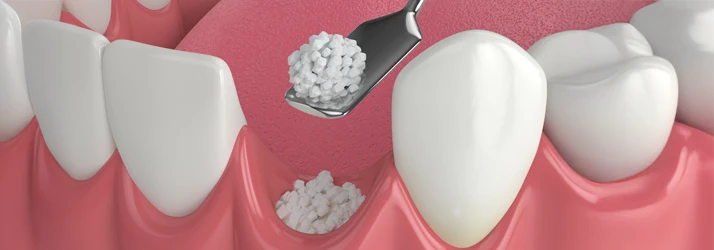
When you’re thinking about dental implants in Cupertino CA and San Francisco CA, it’s not just the replacement tooth that matters—it’s the foundation beneath it. Your jawbone plays the starring role in implant success, and if the bone isn’t thick or dense enough, the implant simply won’t have the support it needs. That’s where bone grafting steps in. As periodontists at all of our Lee Oral & Maxillofacial Surgery and Periodontics locations, we specialize in rebuilding that missing foundation and preparing your mouth for a strong, stable implant that lasts.
Why Bone Grafting Matters for Implant Success
Losing a tooth sets off a chain reaction beneath the surface. Without a tooth root in place, the bone in that area starts to shrink—a natural process called resorption. Gum disease, trauma, and aging can accelerate the loss even more. The challenge? Once the bone is gone, it doesn’t come back on its own.
Bone grafting gives us the ability to restore what’s missing and create a healthy, solid base for your implant. Think of it as preparing the soil before planting a tree. If the ground isn’t strong, nothing can grow successfully.
Bone loss can occur due to:
- Long-term tooth loss
- Periodontal disease
- Infection or injury
- Natural anatomical variations
- Developmental deficiencies
How Bone Grafting Works
Bone grafting is a regenerative procedure that encourages your body to build new bone in areas where it has weakened or disappeared. The grafting material—carefully selected based on your needs—acts like a scaffold. Over time, your body replaces it with your own natural bone, creating a sturdy foundation for your future implant.
The process typically includes:
- Placing graft material under the gum
- Securing and protecting the area
- Allowing the bone to regenerate over several months
- Re-evaluating bone stability before implant placement
It’s a gradual transformation, but the results can be life-changing for patients who once felt implants were not an option.
Types of Bone Grafting Procedures
There is no “one-size-fits-all” approach to bone grafting. Different situations call for different techniques, and part of a periodontist’s expertise lies in choosing the right one for each patient.
Common bone grafting procedures include:
- Socket Preservation
Placed immediately after a tooth extraction to preserve bone height and width. - Ridge Augmentation
Used when the jawbone has significantly thinned or collapsed, rebuilding the ridge to its natural shape. - Sinus Lift (Sinus Augmentation)
Adds bone to the upper back jaw when the sinus cavity has expanded into the space needed for implants. - Guided Bone Regeneration
Uses membranes and grafting materials to encourage precise bone growth and protect the area during healing.
Each technique is tailored to your anatomy, the extent of bone loss, and the location of your future implant.
What to Expect During Treatment
Bone grafting may sound complex, but most patients are surprised by how manageable the process feels. Thanks to modern techniques and effective anesthesia options, the procedure is typically comfortable from start to finish.
Your experience may include:
- A detailed consultation with 3D imaging
- A discussion of your options and treatment goals
- Minimally invasive surgical techniques
- Clear post-operative care instructions
- Periodic check-ins to monitor healing
Every step is handled with precision and careful planning so your implant can integrate successfully once the bone is ready.
Healing and Regeneration: What Happens Next?
After your graft is placed, your body begins its natural process of rebuilding bone. This stage, called osseous regeneration, does not happen overnight—but it’s the key to creating lifelong implant stability.
Most grafts take several months to fully integrate. During this period:
- The graft material gradually becomes part of your natural bone
- The jaw strengthens and thickens
- The site becomes ready for implant placement
- We track your progress closely and let you know exactly when your implant can be placed safely.
Why Bone Grafting Opens the Door to Dental Implants
In years past, patients with significant bone loss were often told that implants weren’t possible. Today, regenerative procedures change that completely. Bone grafting makes dental implants accessible to far more people by rebuilding the foundation from the ground up.
Bone grafting allows us to:
- Restore lost bone volume
- Improve jawbone density
- Support aesthetic implant placement
- Strengthen the structural integrity of your smile
- Prevent additional bone loss in the future
It’s not simply a “preliminary step”—it’s an investment in the long-term success of your implant and the stability of your entire smile.
Addressing Patient Concerns
It’s normal to have questions about bone grafting, especially if the concept is new to you. Many patients initially worry about discomfort, healing time, or whether they “really need” a graft. We take the time to walk you through every detail so you feel confident in your decision.
Common questions include:
How long will the graft take to heal?
What type of bone material will be used?
Will there be swelling or discomfort afterward?
Can I still get implants if I’ve had bone loss for years?
By addressing these concerns openly, we help you understand not only the process but the value behind it.
The Periodontist’s Advantage
Bone grafting isn’t just a surgical procedure—it’s a specialty skill. As periodontists, we work exclusively with the gums, tissues, and bone that support the teeth. Our advanced training allows us to diagnose bone deficiencies accurately, select the appropriate grafting method, and ensure the best possible environment for implant placement.
A periodontist brings:
- Expertise in bone anatomy and regeneration
- Precision in implant and graft placement
- Advanced training in complex and severe bone-loss cases
- A deep understanding of long-term implant health
In other words, we’re specialists in building the foundation your new tooth will rely on.
Rebuilding Your Foundation, Restoring Your Confidence
Bone grafting for dental implants does more than strengthen the jaw—it expands your possibilities. When the bone is restored, your options for tooth replacement grow dramatically. You’re no longer limited by past bone loss or unsuccessful treatments. Instead, you gain access to a stable, natural-looking solution that can last for decades.
With the right care, dental implants in Cupertino CA and San Francisco CA supported by a well-integrated graft can offer unmatched comfort, performance, and durability. The process may take time, but the outcome—a confident, functional smile—makes the journey worth it.

Cupertino
10055 Miller Ave # 105
Cupertino, CA 95014
San Francisco
348 Taraval St
San Francisco, CA 94116